If you’re diving into Microsoft Azure, understanding Azure Resource Manager (ARM) isn’t just helpful—it’s essential. This powerful framework transforms how you deploy, manage, and secure cloud resources with unmatched efficiency and control.
What Is Azure Resource Manager (ARM)?

Azure Resource Manager (ARM) is the foundational deployment and management service for Microsoft Azure. It acts as the control plane that allows you to create, update, and delete resources within your Azure environment through a unified interface and consistent API. Whether you’re managing virtual machines, storage accounts, or complex enterprise applications, ARM provides the structure and governance needed to streamline operations.


The Evolution from Classic to ARM
Prior to ARM, Azure used a deployment model known as ‘Classic,’ where resources were managed in isolation. This led to fragmented management, inconsistent policies, and limited automation capabilities. With the introduction of ARM in 2014, Microsoft shifted to a resource group-based model that enables holistic management of interdependent resources as a single unit.
Azure Resource Manager (ARM) – Azure Resource Manager (ARM) menjadi aspek penting yang dibahas di sini.
- Classic model treated each resource independently.
- ARM introduced resource groups for logical grouping.
- Declarative templates replaced imperative scripts.
This shift allowed teams to move from manual, error-prone processes to automated, repeatable deployments—laying the groundwork for modern DevOps practices in the cloud.
Core Components of ARM Architecture
ARM’s architecture consists of several key components that work together to deliver seamless resource orchestration:
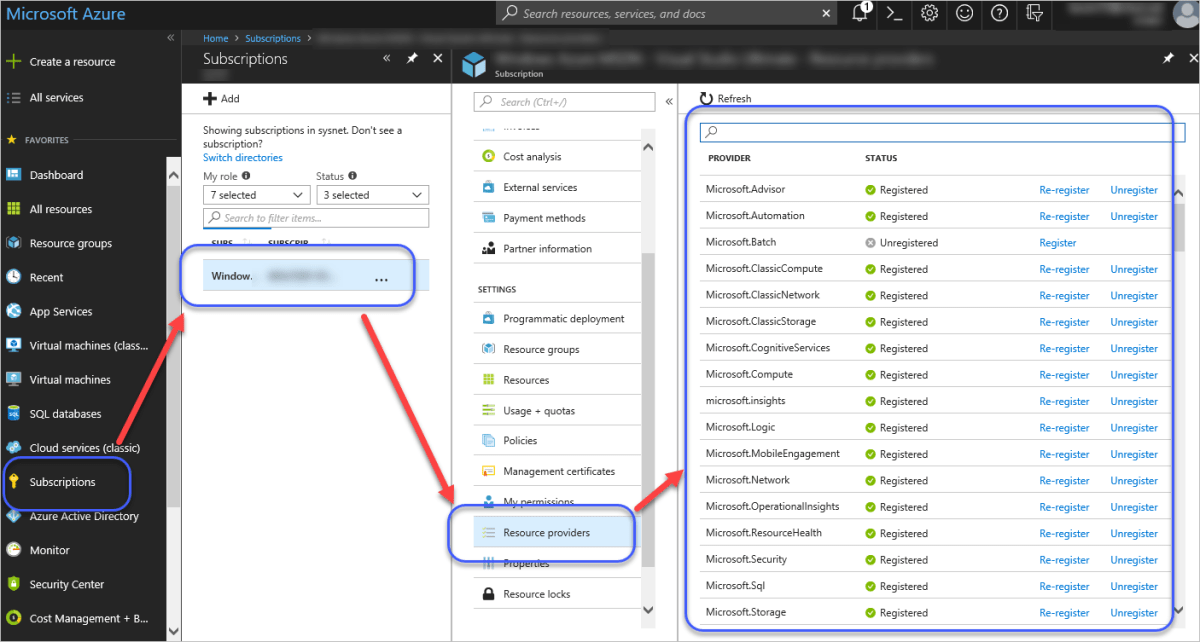
Resource Manager: The engine that processes requests and applies policies.Resource Providers: Services like Microsoft.Compute or Microsoft.Storage that expose APIs for specific resource types.Resource Groups: Logical containers that hold related resources for collective management.ARM Templates: JSON-based declarative files used to define infrastructure as code (IaC).”Azure Resource Manager is not just a tool—it’s the backbone of Azure’s modern cloud management strategy.” — Microsoft Azure DocumentationWhy Azure Resource Manager (ARM) Is a Game-ChangerARM revolutionized how organizations interact with Azure by introducing a structured, policy-driven approach to cloud infrastructure.Its impact spans across deployment speed, operational consistency, and security posture.
Azure Resource Manager (ARM) – Azure Resource Manager (ARM) menjadi aspek penting yang dibahas di sini.
.By centralizing control and enabling automation, ARM empowers teams to scale confidently while maintaining compliance and reducing human error..
Unified Management Across Resource Types
One of ARM’s most significant advantages is its ability to provide a single management layer across all Azure services. Whether you’re deploying a virtual network, a Kubernetes cluster, or a serverless function app, ARM treats them all under the same governance model. This eliminates the need for disparate tools and reduces complexity.
For example, instead of using different portals or APIs for compute, networking, and storage, administrators can use the Azure portal, CLI, PowerShell, or REST APIs—all of which communicate with the ARM layer. This consistency simplifies training, troubleshooting, and integration with third-party tools.
Azure Resource Manager (ARM) – Azure Resource Manager (ARM) menjadi aspek penting yang dibahas di sini.
Role-Based Access Control (RBAC) Integration
ARM natively supports Role-Based Access Control (RBAC), allowing granular permission management at the subscription, resource group, or individual resource level. You can assign roles such as Contributor, Reader, or custom roles to users, groups, or service principals.
- Assign permissions at scale using resource groups.
- Enforce least-privilege access for enhanced security.
- Integrate with Azure Active Directory (AAD) for identity management.
This tight integration ensures that only authorized personnel can make changes, reducing the risk of accidental deletions or unauthorized access.
ARM Templates: Infrastructure as Code (IaC) Made Simple
At the heart of ARM’s automation capability lies the ARM template—a JSON-formatted file that defines the desired state of your Azure infrastructure. These templates enable Infrastructure as Code (IaC), allowing you to version-control, test, and deploy environments consistently across development, staging, and production.
Azure Resource Manager (ARM) – Azure Resource Manager (ARM) menjadi aspek penting yang dibahas di sini.
Structure of an ARM Template
An ARM template follows a standardized JSON schema with several key sections:
- $schema: Specifies the template schema version.
- contentVersion: Tracks template versions for deployment tracking.
- parameters: Inputs that allow customization during deployment.
- variables: Reusable values defined within the template.
- resources: The core section defining which Azure resources to deploy.
- outputs: Values returned after deployment (e.g., public IP address).
Here’s a minimal example of a storage account deployment:
{
  "$schema": "https://schema.management.azure.com/schemas/2019-04-01/deploymentTemplate.json#",
  "contentVersion": "1.0.0.0",
  "resources": [
    {
      "type": "Microsoft.Storage/storageAccounts",
      "apiVersion": "2021-04-01",
      "name": "mystorageaccount123",
      "location": "eastus",
      "sku": {
        "name": "Standard_LRS"
      },
      "kind": "StorageV2"
    }
  ]
}
Parameterization and Reusability
ARM templates shine when they’re parameterized. Instead of hardcoding values like location or instance size, you can define parameters that accept input at deployment time. This makes templates reusable across environments.
Azure Resource Manager (ARM) – Azure Resource Manager (ARM) menjadi aspek penting yang dibahas di sini.
For instance, you might define a location parameter so the same template can deploy resources to East US, West Europe, or any region without modification. Parameters can also have default values, making deployments faster while still allowing overrides when needed.
Learn more about ARM template structure in the official Microsoft documentation.
Deployment Models: ARM vs. Classic
Understanding the difference between ARM and the legacy Classic deployment model is crucial for anyone managing Azure resources. While Classic is still supported for backward compatibility, Microsoft strongly recommends using ARM for all new deployments due to its superior capabilities.
Azure Resource Manager (ARM) – Azure Resource Manager (ARM) menjadi aspek penting yang dibahas di sini.
Key Differences Between ARM and Classic
The contrast between ARM and Classic goes beyond syntax—it represents a fundamental shift in cloud philosophy:
- Dependency Management: ARM understands resource dependencies and deploys them in the correct order; Classic does not.
- Resource Grouping: ARM allows logical grouping via resource groups; Classic uses cloud services as containers with limitations.
- Policy Enforcement: ARM supports Azure Policy and tagging; Classic has minimal governance features.
- API Consistency: ARM provides a unified REST API; Classic APIs are service-specific and inconsistent.
Because of these differences, migrating from Classic to ARM is often a strategic priority for enterprises modernizing their cloud infrastructure.
Migrating from Classic to ARM
Migrating existing Classic resources to ARM requires careful planning. Microsoft provides tools like the Azure Migration Assistant and ASM to ARM migration APIs to help assess compatibility and automate the transition.
Azure Resource Manager (ARM) – Azure Resource Manager (ARM) menjadi aspek penting yang dibahas di sini.
Steps typically include:
- Inventorying Classic resources.
- Validating ARM support for each resource type.
- Planning downtime windows for migration.
- Using automation tools to convert configurations.
- Validating functionality post-migration.
It’s important to note that not all Classic resources can be migrated in-place—some require recreation in ARM, followed by data migration. Always back up configurations and test thoroughly in a non-production environment first.
Role of Azure Resource Manager (ARM) in DevOps
In modern DevOps workflows, consistency, speed, and repeatability are non-negotiable. Azure Resource Manager (ARM) plays a pivotal role in enabling CI/CD pipelines by providing a reliable, automated way to provision infrastructure alongside application code.
Azure Resource Manager (ARM) – Azure Resource Manager (ARM) menjadi aspek penting yang dibahas di sini.
Integration with CI/CD Pipelines
ARM templates integrate seamlessly with popular DevOps tools like Azure DevOps, GitHub Actions, Jenkins, and Terraform (via AzureRM provider). You can trigger ARM template deployments as part of a pipeline stage, ensuring that infrastructure changes are tested, reviewed, and deployed just like application code.
For example, in an Azure DevOps pipeline, you might use the Azure Resource Group Deployment task to deploy an ARM template to a staging environment after every successful build. If tests pass, the same template can be promoted to production with environment-specific parameters.
Version Control and Auditability
By storing ARM templates in version control systems like Git, teams gain full audit trails of infrastructure changes. Every modification—whether adding a subnet or changing a VM size—is tracked, reviewed via pull requests, and rolled back if necessary.
Azure Resource Manager (ARM) – Azure Resource Manager (ARM) menjadi aspek penting yang dibahas di sini.
- Enables peer review of infrastructure changes.
- Facilitates compliance audits with change history.
- Supports rollback to previous known-good states.
This level of transparency was nearly impossible with manual deployments or Classic scripts, making ARM a cornerstone of reliable cloud operations.
Security and Governance with Azure Resource Manager (ARM)
Security in the cloud isn’t just about firewalls and encryption—it’s about governance, visibility, and control. Azure Resource Manager (ARM) provides robust mechanisms to enforce security policies, monitor compliance, and prevent configuration drift.
Azure Policy for Compliance Enforcement
Azure Policy allows you to define rules that govern how resources should be configured. These policies are evaluated by ARM during deployment and continuously monitored afterward. For example, you can create a policy that:
Azure Resource Manager (ARM) – Azure Resource Manager (ARM) menjadi aspek penting yang dibahas di sini.
- Requires all storage accounts to have encryption enabled.
- Ensures virtual machines use approved VM sizes.
- Enforces naming conventions across resources.
Policies can be assigned at the management group, subscription, or resource group level, enabling centralized governance across large organizations.
Explore built-in policies at Azure Policy Samples.
Tagging and Cost Management
ARM supports resource tagging—key-value pairs that help organize and track resources. Tags like Environment=Production, Department=Finance, or Owner=TeamAlpha enable powerful filtering and reporting.
Azure Resource Manager (ARM) – Azure Resource Manager (ARM) menjadi aspek penting yang dibahas di sini.
When combined with Azure Cost Management, tags allow finance teams to allocate cloud spending accurately. You can generate cost reports by department, project, or environment, helping identify waste and optimize budgets.
“Tags are the unsung heroes of cloud governance—they turn chaos into clarity.” — Cloud Architecture Best Practices
Best Practices for Using Azure Resource Manager (ARM)
To get the most out of Azure Resource Manager (ARM), it’s essential to follow proven best practices. These guidelines help avoid common pitfalls, improve maintainability, and ensure long-term success in your cloud journey.
Organize Resources with Logical Resource Groups
Resource groups should reflect your application lifecycle or business structure—not arbitrary collections. For example:
Azure Resource Manager (ARM) – Azure Resource Manager (ARM) menjadi aspek penting yang dibahas di sini.
- Create separate resource groups for Dev, Test, and Prod.
- Group all components of a web application (VMs, DB, network) in one resource group.
- Avoid putting unrelated resources in the same group.
This approach simplifies management, access control, and deletion (e.g., tearing down a test environment).
Use Nested and Linked Templates for Complex Deployments
For large or complex environments, monolithic ARM templates become hard to manage. Instead, break them into modular components using:
- Nested Templates: Embed one template inside another.
- Linked Templates: Reference external templates via URI (e.g., stored in Azure Storage or GitHub).
This promotes reusability and separation of concerns—e.g., a networking template can be reused across multiple projects.
Azure Resource Manager (ARM) – Azure Resource Manager (ARM) menjadi aspek penting yang dibahas di sini.
Leverage Azure Blueprints for Enterprise Standards
For organizations with strict compliance requirements, Azure Blueprints goes beyond ARM templates by packaging templates, policies, role assignments, and artifacts into reusable blueprints. These can be published and assigned across subscriptions, ensuring consistent deployment of secure, compliant environments.
Blueprints are ideal for onboarding new teams or launching regulated workloads like HIPAA or GDPR-compliant applications.
What is Azure Resource Manager (ARM)?
Azure Resource Manager (ARM) – Azure Resource Manager (ARM) menjadi aspek penting yang dibahas di sini.
Azure Resource Manager (ARM) is the deployment and management framework for Microsoft Azure. It provides a consistent layer for provisioning resources, enforcing policies, and managing access through templates, RBAC, and resource groups.
How do ARM templates work?
ARM templates are JSON files that define the desired state of Azure resources. They use a declarative syntax, allowing you to specify what you want deployed without writing procedural scripts. During deployment, ARM ensures the infrastructure matches the template.
Azure Resource Manager (ARM) – Azure Resource Manager (ARM) menjadi aspek penting yang dibahas di sini.
Can I use ARM with Terraform?
Yes, but they serve similar purposes. While ARM templates are Azure-native, Terraform is a multi-cloud IaC tool. Many organizations choose one or the other, though hybrid approaches exist. Terraform uses its own HCL language and state management, whereas ARM integrates tightly with Azure services.
Is ARM still relevant with Bicep?
Azure Resource Manager (ARM) – Azure Resource Manager (ARM) menjadi aspek penting yang dibahas di sini.
Absolutely. Bicep is a domain-specific language (DSL) that compiles down to ARM templates. It simplifies authoring but doesn’t replace ARM—it enhances it. All Bicep deployments ultimately run through the ARM engine.
What are the main benefits of using ARM?
Key benefits include consistent deployments, infrastructure as code, role-based access control, policy enforcement, resource grouping, and integration with DevOps pipelines. ARM reduces manual errors, improves security, and accelerates cloud operations.
Azure Resource Manager (ARM) – Azure Resource Manager (ARM) menjadi aspek penting yang dibahas di sini.
Azure Resource Manager (ARM) is far more than a deployment tool—it’s the strategic foundation for managing Azure at scale. From enabling Infrastructure as Code to enforcing enterprise-wide policies, ARM empowers organizations to build secure, compliant, and automated cloud environments. Whether you’re a developer, administrator, or architect, mastering ARM is a critical step toward unlocking Azure’s full potential. By leveraging templates, policies, and best practices, you can transform your cloud operations from reactive to proactive, chaotic to controlled, and manual to automated.
Azure Resource Manager (ARM) – Azure Resource Manager (ARM) menjadi aspek penting yang dibahas di sini.
Recommended for you 👇
Further Reading: