Imagine your business network running faster, safer, and more reliably than ever—without relying on the public internet. That’s the power of ExpressRoute.
What Is ExpressRoute and Why It Matters

ExpressRoute is Microsoft’s premium network service that enables organizations to establish private, dedicated connections between their on-premises infrastructure and Microsoft Azure, Office 365, Dynamics 365, and other cloud platforms. Unlike traditional internet-based connections, ExpressRoute bypasses the public web, offering enhanced performance, security, and reliability.




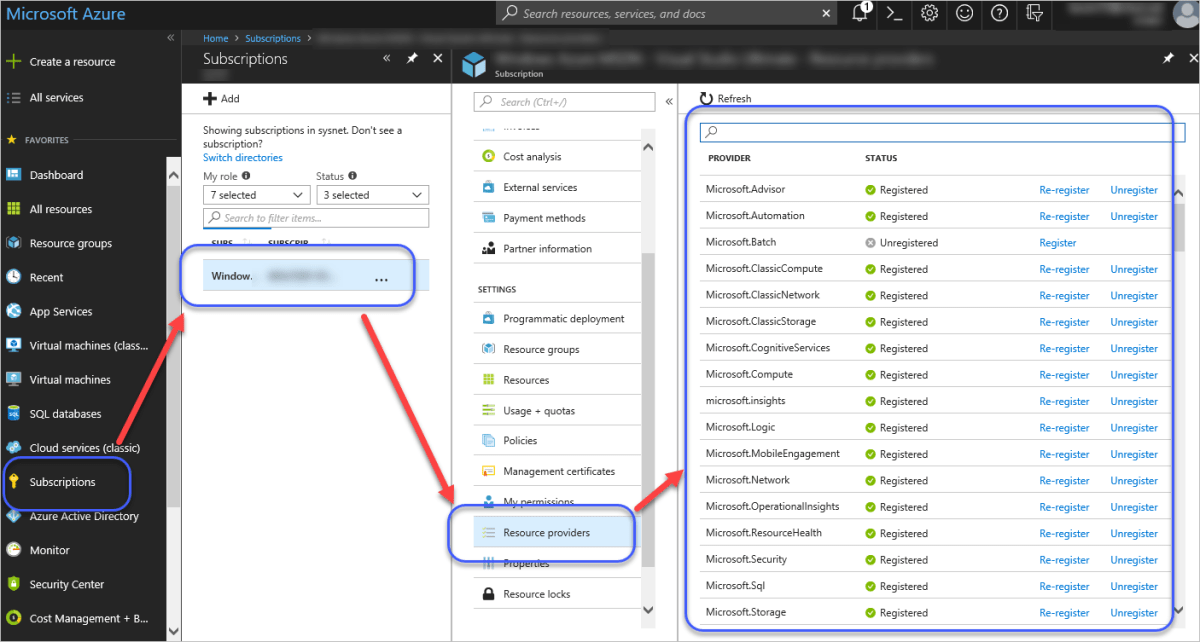
How ExpressRoute Differs from Public Internet Connections
When you connect to cloud services over the public internet, your data travels through multiple third-party networks, increasing latency, jitter, and the risk of packet loss. ExpressRoute eliminates this by creating a direct, private link from your network to Microsoft’s global backbone.
- Public internet connections are shared, unpredictable, and prone to congestion.
- ExpressRoute provides dedicated bandwidth with predictable performance.
- Data never traverses the public internet, reducing exposure to DDoS attacks and eavesdropping.
“ExpressRoute is not just a connection—it’s a strategic advantage for enterprises moving to the cloud.” — Microsoft Azure Architecture Center
Core Components of ExpressRoute Architecture
Understanding the technical building blocks of ExpressRoute helps in planning and deployment. The service relies on several key components working in harmony:
- ExpressRoute Circuit: A logical connection created through a connectivity provider, serving as the dedicated pipe between your network and Azure.
- Peering Locations: Physical data centers where your network provider interconnects with Microsoft’s network.
- Peering Types: Microsoft Peering, Azure Private Peering, and Office 365 Peering—each enabling access to different Microsoft services.
These components allow granular control over traffic flow, security policies, and service access. For example, Azure Private Peering is used to access virtual machines and PaaS services within Azure virtual networks, while Microsoft Peering grants access to public Azure services like Blob Storage using public IP addresses.
ExpressRoute vs. VPN: Key Differences and Use Cases
While both ExpressRoute and site-to-site VPNs connect on-premises networks to Azure, they serve different needs based on performance, cost, and security requirements.
Performance and Latency Comparison
Latency is a critical factor in cloud application performance. ExpressRoute consistently delivers lower latency because it uses private fiber connections with minimal hops.
- Typical site-to-site VPN latency: 50–150 ms (varies with internet congestion).
- ExpressRoute latency: Often under 30 ms, especially in metro-adjacent peering locations.
- Bandwidth options for ExpressRoute range from 50 Mbps to 100 Gbps, far exceeding typical VPN throughput.
For latency-sensitive applications like real-time analytics, VoIP, or high-frequency trading systems, ExpressRoute is the clear winner. You can learn more about performance benchmarks on Microsoft’s official ExpressRoute performance guide.
Security and Data Privacy Implications
Security is where ExpressRoute truly shines. Because traffic doesn’t traverse the public internet, it’s inherently more secure than IPsec-based VPNs.
- ExpressRoute circuits are isolated at the physical or logical layer by your service provider.
- No exposure to internet-based threats like man-in-the-middle attacks or IP spoofing.
- Complements zero-trust architectures by minimizing attack surface.
While VPNs encrypt data in transit, they still rely on the public internet, making them vulnerable to outages and performance degradation. ExpressRoute provides a secure foundation that can be further enhanced with encryption at the application or data layer.
Top 7 Business Benefits of Using ExpressRoute
Adopting ExpressRoute isn’t just a technical upgrade—it’s a strategic move that delivers measurable business value. Here are seven powerful advantages that make it indispensable for modern enterprises.
1. Predictable Network Performance
One of the biggest frustrations with internet-based cloud access is inconsistency. Bandwidth fluctuates, latency spikes during peak hours, and packet loss can disrupt critical workflows. ExpressRoute solves this with Service Level Agreements (SLAs) that guarantee uptime and performance.
- Microsoft offers a 99.95% uptime SLA for ExpressRoute circuits.
- Dedicated bandwidth ensures consistent throughput for mission-critical applications.
- Supports real-time applications like video conferencing and database replication.
This predictability is crucial for businesses running hybrid cloud environments where on-premises systems must seamlessly interact with cloud resources.
2. Enhanced Security and Compliance
In an era of rising cyber threats and strict regulatory requirements (like GDPR, HIPAA, and CCPA), data security is non-negotiable. ExpressRoute enhances security by keeping sensitive data off the public internet.
- Reduces the risk of data interception during transit.
- Supports compliance with data residency and sovereignty regulations.
- Integrates with Azure Firewall, Network Security Groups, and private endpoints for defense-in-depth.
For industries like finance, healthcare, and government, ExpressRoute is often a requirement rather than an option. It enables secure access to cloud services without compromising on regulatory obligations.
3. Lower Latency for Cloud Applications
Latency directly impacts user experience and application efficiency. High latency can make cloud-based ERP systems sluggish, delay database queries, and degrade VoIP call quality.
- ExpressRoute reduces round-trip time by up to 60% compared to internet routes.
- Optimized routing through Microsoft’s global network backbone improves responsiveness.
- Enables seamless integration of on-premises legacy systems with cloud-native apps.
For global enterprises, ExpressRoute’s presence in over 170 peering locations worldwide ensures low-latency access regardless of geographic location.
ExpressRoute Connectivity Models and Deployment Options
ExpressRoute offers flexible deployment models to suit different organizational needs, from small businesses to multinational corporations. Choosing the right model depends on your existing infrastructure, scalability requirements, and network strategy.
Carrier-Based Model (Service Provider Connectivity)
This is the most common deployment method, where organizations lease a dedicated circuit from a telecommunications provider that partners with Microsoft.
- Providers include AT&T, BT, Verizon, NTT, and Equinix.
- Circuits can be deployed as Ethernet or MPLS connections.
- Supports bandwidth scaling from 50 Mbps to 10 Gbps (and up to 100 Gbps for select providers).
This model is ideal for enterprises with existing relationships with telecom providers and those seeking plug-and-play integration with Azure. More details on partner providers can be found at Microsoft’s ExpressRoute partners page.
Cloud Exchange Model (Co-Location Providers)
In this model, you deploy your infrastructure in a data center that hosts both your equipment and Microsoft’s network edge routers. This allows for direct cross-connects within the same facility.
- Popular co-location providers: Equinix, Digital Realty, Cyxtera.
- Offers the lowest possible latency and highest performance.
- Ideal for organizations requiring 10 Gbps+ bandwidth or ultra-low latency.
The cloud exchange model is often used by large enterprises, SaaS providers, and financial institutions that demand the highest levels of performance and control.
Point-to-Site and Multi-Region Connectivity
ExpressRoute supports complex network topologies, including multi-region deployments and hybrid architectures.
- Global Reach feature allows extending ExpressRoute circuits across Azure regions.
- Supports active-active and active-passive configurations for high availability.
- Can be combined with Azure Virtual WAN for simplified global networking.
For organizations with data centers in multiple countries, ExpressRoute Global Reach enables seamless interconnection between on-premises sites via Microsoft’s backbone, eliminating the need for third-party WAN providers.
ExpressRoute Peering Types Explained
Peering is the mechanism that defines how your network communicates with Microsoft’s services over an ExpressRoute circuit. There are three main types of peering, each serving a distinct purpose.
Azure Private Peering
This is the most commonly used peering type, designed for accessing Azure virtual networks (VNets) and private PaaS services.
- Uses private IP addresses (RFC 1918) for communication.
- Enables secure connectivity to VMs, Azure SQL, App Services (when integrated with VNet), and more.
- Supports dynamic routing via BGP (Border Gateway Protocol).
Azure Private Peering is essential for hybrid cloud scenarios where on-premises applications need secure, low-latency access to Azure resources.
Microsoft Peering
Microsoft Peering allows access to Microsoft’s public cloud services using public IP addresses.
- Provides connectivity to services like Azure Storage, Azure Backup, and Azure App Service public endpoints.
- Supports IPv4 and IPv6.
- Requires public IP address registration and ASN configuration.
This peering type is useful when you need to access public-facing Azure services without routing traffic over the internet, improving performance and security.
Office 365 Peering
Although technically a subset of Microsoft Peering, Office 365 Peering is optimized specifically for Microsoft 365 workloads.
- Enables direct access to Exchange Online, SharePoint Online, Teams, and other M365 services.
- Improves performance for large file uploads, video conferencing, and mailbox synchronization.
- Reduces dependency on internet bandwidth for O365 traffic.
Organizations with heavy Microsoft 365 usage benefit significantly from this peering, especially those with global teams and large data transfer needs.
ExpressRoute Resiliency and High Availability Design
Downtime is costly. A well-designed ExpressRoute deployment includes redundancy and failover mechanisms to ensure continuous operations.
Active-Active vs. Active-Passive Circuits
ExpressRoute supports both active-active and active-passive configurations for high availability.
- Active-Active: Two circuits handle traffic simultaneously, providing load balancing and instant failover.
- Active-Passive: One circuit is primary; the other activates only during failure.
- Active-active is recommended for mission-critical applications requiring zero downtime.
Microsoft recommends deploying circuits from two different service providers in separate peering locations to avoid single points of failure.
Integrating ExpressRoute with Azure Load Balancer and Traffic Manager
To maximize availability, ExpressRoute should be combined with Azure’s traffic management services.
- Azure Load Balancer distributes traffic across VMs within a region.
- Traffic Manager enables DNS-based routing across multiple regions.
- When paired with ExpressRoute, these services ensure seamless failover during outages.
For example, if an ExpressRoute circuit in one region fails, Traffic Manager can redirect users to a secondary region connected via another ExpressRoute link.
Disaster Recovery and Business Continuity Planning
ExpressRoute plays a vital role in disaster recovery strategies by enabling fast, secure data replication between on-premises and cloud environments.
- Supports synchronous and asynchronous replication for databases and virtual machines.
- Integrates with Azure Site Recovery for automated failover and failback.
- Ensures RPO (Recovery Point Objective) and RTO (Recovery Time Objective) targets are met.
By leveraging ExpressRoute, organizations can achieve near-zero data loss and rapid recovery times during outages.
Cost Analysis and Pricing Models for ExpressRoute
While ExpressRoute offers superior performance and security, it comes at a higher cost than internet-based connectivity. Understanding the pricing structure helps in making informed decisions.
Understanding ExpressRoute Pricing Tiers
ExpressRoute pricing varies based on bandwidth, peering location, and deployment model.
- Local circuits (within the same metro): Lowest cost, ideal for regional access.
- National circuits: Higher cost, suitable for country-wide connectivity.
- Global circuits: Most expensive, used for cross-border connectivity with Global Reach.
For example, a 1 Gbps local circuit might cost $200/month, while a global circuit of the same bandwidth could exceed $2,000/month. Detailed pricing is available on Microsoft’s ExpressRoute pricing page.
Hidden Costs and Optimization Strategies
Besides the circuit cost, organizations should consider additional expenses:
- Service provider charges for installation and maintenance.
- Co-location fees in data centers for cross-connects.
- Bandwidth overages if usage exceeds provisioned limits.
To optimize costs:
- Right-size bandwidth based on actual usage patterns.
- Use ExpressRoute for critical workloads only, and route less sensitive traffic over the internet.
- Leverage Azure Monitor and ExpressRoute metrics to track utilization and plan upgrades.
Many enterprises adopt a hybrid approach—using ExpressRoute for core applications and secure data transfer, while relying on the internet for general browsing and non-critical services.
Best Practices for Deploying and Managing ExpressRoute
Successful ExpressRoute implementation requires careful planning, monitoring, and governance. Following industry best practices ensures optimal performance and security.
Network Design and Planning Checklist
Before deploying ExpressRoute, conduct a thorough assessment:
- Identify critical applications that require low latency and high availability.
- Determine required bandwidth based on data transfer patterns.
- Select peering locations closest to your users and data centers.
- Plan for redundancy with dual circuits and providers.
Use Azure Network Watcher and ExpressRoute Circuit Advisor to validate configurations and detect potential issues.
Monitoring and Performance Tuning
Ongoing monitoring is essential to maintain optimal performance.
- Use Azure Monitor to track circuit health, BGP status, and throughput.
- Set up alerts for latency spikes, packet loss, or circuit failures.
- Regularly review routing tables and peering configurations.
Microsoft provides detailed telemetry through the Azure portal, including round-trip time, bytes in/out, and BGP peer state.
Security and Access Control Policies
Even though ExpressRoute is secure by design, additional controls are recommended:
- Implement network segmentation using NSGs and Azure Firewall.
- Use private endpoints to access PaaS services without public exposure.
- Enforce identity-based access controls via Azure AD and Conditional Access.
Regular security audits and penetration testing should include the ExpressRoute infrastructure to ensure end-to-end protection.
What is ExpressRoute used for?
ExpressRoute is used to create private, high-performance connections between on-premises networks and Microsoft cloud services like Azure, Office 365, and Dynamics 365. It’s ideal for hybrid cloud deployments, secure data transfer, and latency-sensitive applications.
How much does ExpressRoute cost?
Pricing varies based on bandwidth, location, and circuit type. Local circuits start around $50/month for 50 Mbps, while global 10 Gbps circuits can exceed $10,000/month. Additional costs may include provider fees and cross-connect charges.
Can ExpressRoute replace my internet connection?
No, ExpressRoute is not a replacement for general internet access. It’s designed for connecting to Microsoft cloud services. You still need an internet connection for web browsing, third-party SaaS apps, and non-Microsoft cloud services.
Is ExpressRoute more secure than a VPN?
Yes, ExpressRoute is more secure than a site-to-site VPN because it avoids the public internet entirely. While VPNs encrypt traffic, they still traverse shared networks, making them vulnerable to congestion and attacks. ExpressRoute provides physical/logical isolation and is ideal for sensitive workloads.
How do I troubleshoot ExpressRoute connectivity issues?
Use Azure Network Watcher’s Connection Monitor and ExpressRoute Circuit Advisor to diagnose issues. Check BGP peering status, routing tables, and circuit provisioning state. Contact your service provider if the issue lies outside Azure.
In conclusion, ExpressRoute is a game-changer for enterprises embracing the cloud. It delivers unmatched performance, security, and reliability by providing a private bridge to Microsoft’s global network. Whether you’re migrating workloads to Azure, enhancing Microsoft 365 performance, or building a resilient hybrid architecture, ExpressRoute offers the foundation you need. By understanding its capabilities, deployment models, and best practices, organizations can unlock the full potential of cloud computing while maintaining control, compliance, and continuity. The investment in ExpressRoute isn’t just about connectivity—it’s about future-proofing your business in a cloud-first world.
Further Reading: