Imagine having the best of both worlds—scalability of the public cloud and control of your private infrastructure. That’s exactly what a Hybrid Cloud offers, revolutionizing how businesses manage data, applications, and growth in today’s digital era.
What Is a Hybrid Cloud?

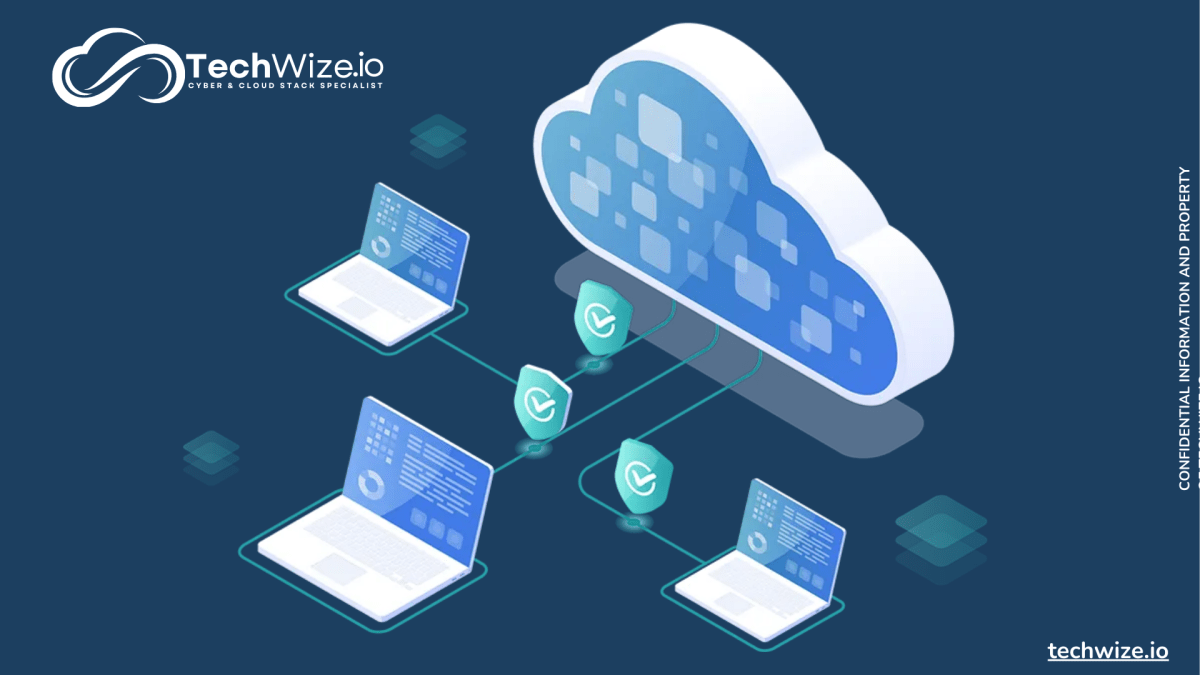
The term Hybrid Cloud refers to an integrated computing environment that combines on-premises infrastructure (private cloud) with public cloud services, allowing data and applications to be shared between them. This model enables organizations to scale dynamically while maintaining control over sensitive operations.




Definition and Core Components
A Hybrid Cloud isn’t just a mix of two environments—it’s a strategically orchestrated ecosystem. It typically includes:
- A private cloud or on-premise data center
- One or more public cloud providers (like AWS, Microsoft Azure, or Google Cloud)
- A secure, high-speed network connecting both environments
- Unified management tools for seamless operations
According to IBM, the key differentiator of a Hybrid Cloud is workload portability, consistent management, and orchestration across environments.
How Hybrid Cloud Differs From Public and Private Clouds
Understanding the distinctions is crucial:
- Public Cloud: Owned and operated by third-party providers, offering scalable resources over the internet (e.g., AWS EC2).
- Private Cloud: Dedicated infrastructure for a single organization, hosted on-premises or by a third party, prioritizing security and control.
- Hybrid Cloud: Bridges the gap, enabling workloads to move between private and public clouds based on needs like cost, compliance, or performance.
“Hybrid Cloud is not a destination—it’s a journey toward agility, resilience, and innovation.” — Gartner Research
Why Organizations Are Adopting Hybrid Cloud
The shift toward Hybrid Cloud adoption isn’t just a trend—it’s a strategic response to evolving business demands. From startups to Fortune 500 companies, organizations are leveraging this model to balance flexibility, cost, and compliance.
Business Agility and Scalability
In fast-moving markets, the ability to scale IT resources on demand is a competitive advantage. With a Hybrid Cloud, businesses can:
- Spin up new virtual machines in the public cloud during traffic spikes
- Automate scaling using tools like Kubernetes or Terraform
- Reduce time-to-market for new applications
For example, an e-commerce platform can handle Black Friday traffic by temporarily offloading workloads to AWS while keeping core databases in a secure private environment.
Cost Optimization and Resource Efficiency
One of the most compelling reasons for adopting a Hybrid Cloud is financial efficiency. Organizations avoid over-provisioning by:
- Running steady-state workloads on-premises where costs are predictable
- Using public cloud for variable or bursty workloads
- Leveraging reserved instances and spot pricing for savings
A study by McKinsey found that companies using hybrid models reduced cloud spending by up to 30% compared to full public cloud strategies.
Key Benefits of Hybrid Cloud Architecture
The Hybrid Cloud model delivers tangible advantages that align with modern business goals. Let’s explore the top benefits driving its adoption.
Enhanced Security and Data Control
Security remains a top concern for enterprises. A Hybrid Cloud allows organizations to:
- Keep sensitive data (e.g., customer PII, financial records) in a tightly controlled private environment
- Apply encryption, access controls, and monitoring consistently across clouds
- Meet regulatory requirements like GDPR, HIPAA, or PCI-DSS
For instance, healthcare providers can store patient records on-premises while using the public cloud for non-sensitive analytics processing.
Disaster Recovery and Business Continuity
Downtime can cost millions. A Hybrid Cloud enables robust disaster recovery (DR) strategies by replicating critical systems to the public cloud.
- Automated failover mechanisms ensure minimal disruption
- Cloud-based backups are geographically distributed and highly available
- Recovery Time Objectives (RTO) and Recovery Point Objectives (RPO) are significantly improved
Companies like Netflix use similar models to maintain 99.99% uptime, even during regional outages.
Workload Flexibility and Optimization
Not all applications are created equal. Some require low latency, others need massive compute power. Hybrid Cloud allows:
- Moving workloads to the optimal environment based on performance needs
- Running AI/ML training in the public cloud while keeping inference models on-prem
- Testing in the cloud before deploying to production environments
This flexibility ensures that each application runs where it performs best—without vendor lock-in.
Hybrid Cloud Use Cases Across Industries
The versatility of Hybrid Cloud makes it applicable across various sectors. Let’s examine real-world implementations.
Financial Services: Balancing Compliance and Innovation
Banks and insurers handle vast amounts of sensitive data. They use Hybrid Cloud to:
- Host core banking systems on private infrastructure
- Leverage public cloud for fraud detection algorithms and customer-facing apps
- Conduct stress testing and risk modeling using cloud-based HPC (High-Performance Computing)
Goldman Sachs, for example, partnered with Amazon Web Services to modernize its trading platforms while maintaining strict regulatory compliance.
Healthcare: Secure Data Sharing and Telemedicine
In healthcare, data privacy is paramount. Hybrid Cloud enables:
- Storing electronic health records (EHR) in secure on-premise servers
- Using public cloud for telehealth platforms and AI-driven diagnostics
- Sharing anonymized data for research without compromising patient privacy
Mayo Clinic uses a hybrid approach to support remote consultations and real-time data analysis during surgeries.
Retail and E-commerce: Handling Seasonal Traffic Spikes
Retailers face extreme demand fluctuations. Hybrid Cloud helps them:
- Scale web servers and databases during holiday seasons
- Run personalized recommendation engines in the cloud
- Maintain inventory management systems on-premises for stability
Walmart uses a Hybrid Cloud strategy to manage over 2 billion online transactions annually, ensuring smooth performance even during peak sales.
Challenges and Risks of Hybrid Cloud Implementation
While the benefits are significant, adopting a Hybrid Cloud comes with challenges that must be addressed proactively.
Complexity in Management and Integration
Managing multiple environments increases operational complexity. Common issues include:
- Inconsistent policies across clouds
- Lack of visibility into resource usage
- Different APIs and tooling between vendors
Solution: Implement cloud management platforms (CMPs) like VMware vRealize or Red Hat CloudForms to unify monitoring, provisioning, and governance.
Security and Compliance Risks
Data moving between environments can expose vulnerabilities. Risks include:
- Unsecured data transfer over public networks
- Shadow IT—unauthorized cloud usage by departments
- Compliance gaps due to inconsistent auditing
Mitigation strategies involve zero-trust architectures, end-to-end encryption, and continuous compliance monitoring tools like Palo Alto Prisma Cloud.
Networking and Latency Issues
Performance depends heavily on network quality. Latency can become a bottleneck when:
- Applications rely on real-time data exchange between on-prem and cloud
- Bandwidth is insufficient for large data transfers
- Peering agreements with cloud providers are suboptimal
Best practices include using Direct Connect (AWS), ExpressRoute (Azure), or dedicated interconnects to ensure low-latency, high-throughput connections.
Best Practices for Building a Successful Hybrid Cloud Strategy
Success with Hybrid Cloud requires more than just technology—it demands strategic planning and execution.
Assess Workload Requirements First
Not every application belongs in the cloud. Start by categorizing workloads based on:
- Sensitivity (e.g., regulated vs. non-regulated data)
- Performance needs (latency, IOPS, CPU intensity)
- Scalability requirements (static vs. dynamic load)
Use tools like Microsoft’s Azure Migrate or AWS Application Discovery Service to analyze existing systems and recommend optimal placement.
Choose the Right Cloud Providers and Tools
Vendor selection impacts long-term flexibility. Consider:
- Interoperability with your current infrastructure
- Support for containerization (e.g., Kubernetes)
- Availability of hybrid-specific services (e.g., Azure Stack, AWS Outposts)
Google Anthos and IBM Cloud Paks offer vendor-agnostic platforms that run consistently across environments.
Implement Strong Governance and Automation
Automation reduces human error and ensures consistency. Key actions include:
- Using Infrastructure as Code (IaC) tools like Terraform or Ansible
- Enforcing security policies via automated compliance checks
- Setting up centralized logging and monitoring with tools like Splunk or Datadog
According to Gartner, organizations that automate 70% or more of their cloud operations see a 50% reduction in incidents.
Future Trends Shaping Hybrid Cloud Evolution
The Hybrid Cloud landscape is rapidly evolving. Emerging technologies and market shifts are redefining what’s possible.
Rise of Edge Computing and Distributed Cloud
As IoT and 5G expand, data is generated closer to the source. Hybrid Cloud is extending to the edge, where:
- Local devices process time-sensitive data (e.g., autonomous vehicles)
- Only aggregated insights are sent to central clouds
- Hybrid architectures now include edge nodes as first-tier processing layers
Gartner predicts that by 2025, over 50% of enterprise-generated data will be processed outside traditional data centers or public clouds—up from 10% in 2019.
AI-Driven Cloud Management
Artificial Intelligence for IT Operations (AIOps) is transforming how Hybrid Clouds are managed. AI-powered tools can:
- Predict capacity needs and auto-scale resources
- Detect anomalies and prevent outages before they occur
- Optimize costs by identifying underutilized resources
Platforms like Dynatrace and Moogsoft are already integrating machine learning to enhance observability and decision-making.
Increased Focus on Sustainability
Cloud providers are under pressure to reduce carbon footprints. Future Hybrid Cloud strategies will prioritize:
- Selecting green data centers powered by renewable energy
- Optimizing workloads to minimize energy consumption
- Using carbon-aware scheduling to run tasks during low-emission periods
Microsoft’s Azure has committed to being carbon-negative by 2030, influencing customer choices in hybrid deployments.
How to Get Started with Hybrid Cloud: A Step-by-Step Guide
Transitioning to a Hybrid Cloud doesn’t have to be overwhelming. Follow this structured approach to ensure success.
Step 1: Conduct a Current State Assessment
Begin by auditing your existing IT infrastructure:
- Inventory all applications, servers, and dependencies
- Map data flows and identify critical systems
- Evaluate current performance, costs, and pain points
This baseline helps determine which workloads are candidates for migration.
Step 2: Define Clear Objectives and KPIs
Align your Hybrid Cloud initiative with business goals. Define measurable outcomes such as:
- Reduce infrastructure costs by 20% within 12 months
- Achieve 99.95% application availability
- Improve deployment speed by 50%
Clear KPIs keep the project focused and justify investment.
Step 3: Design the Architecture and Select Vendors
Work with architects and cloud experts to design a scalable, secure hybrid topology. Key decisions include:
- Choosing public cloud providers (multi-cloud vs. single)
- Selecting connectivity options (VPN, direct connect)
- Defining identity and access management (IAM) policies
Engage vendors early for proof-of-concept testing.
Step 4: Pilot and Iterate
Start small with a non-critical workload. Monitor performance, security, and user feedback. Use insights to refine the architecture before full-scale rollout.
- Migrate a dev/test environment first
- Validate backup and recovery processes
- Train teams on new tools and procedures
Iteration reduces risk and builds organizational confidence.
Step 5: Scale and Optimize Continuously
Once proven, expand the model to more applications. Use monitoring and analytics to:
- Identify cost-saving opportunities
- Improve security posture
- Enhance user experience
Hybrid Cloud is not a one-time project—it’s an ongoing journey of optimization.
What is a Hybrid Cloud?
A Hybrid Cloud is a computing environment that combines private cloud (on-premises) and public cloud services, allowing data and applications to be shared between them. It provides greater flexibility, scalability, and deployment options.
What are the main benefits of Hybrid Cloud?
The key benefits include cost optimization, enhanced security, workload flexibility, disaster recovery, and compliance support. It allows businesses to scale efficiently while maintaining control over critical systems.
Is Hybrid Cloud secure?
Yes, when properly configured. Hybrid Cloud can be more secure than public-only models because sensitive data can remain on-premises. Security depends on strong encryption, access controls, network segmentation, and continuous monitoring.
Which industries benefit most from Hybrid Cloud?
Financial services, healthcare, retail, government, and manufacturing are among the top adopters. These sectors require a balance of security, compliance, and scalability—exactly what Hybrid Cloud provides.
How does Hybrid Cloud reduce costs?
By running stable workloads on-premises and using public cloud for variable demand, organizations avoid over-provisioning. They also leverage cloud pricing models like reserved instances and spot instances to cut expenses.
Hybrid Cloud is more than a technology trend—it’s a strategic enabler for modern businesses. By combining the control of private infrastructure with the scalability of public cloud, organizations gain unmatched flexibility, security, and efficiency. While challenges like complexity and integration exist, they can be overcome with proper planning, automation, and governance. As edge computing, AI, and sustainability shape the future, Hybrid Cloud will remain at the heart of digital transformation. The journey may be complex, but the rewards—agility, resilience, and innovation—are well worth the effort.
Further Reading:
