Welcome to the world of connected intelligence. If you’ve ever wondered how your smart lights, thermostat, and security camera talk to each other seamlessly, the answer lies in one central hero: the IoT Hub. It’s the brain behind the smart revolution.
What Is an IoT Hub and Why It Matters

An IoT Hub acts as a central communication platform that connects, manages, and secures Internet of Things (IoT) devices. Think of it as the nervous system of a smart home or industrial automation setup. Without it, devices would operate in isolation, unable to share data or respond intelligently to user commands.



The Core Function of an IoT Hub
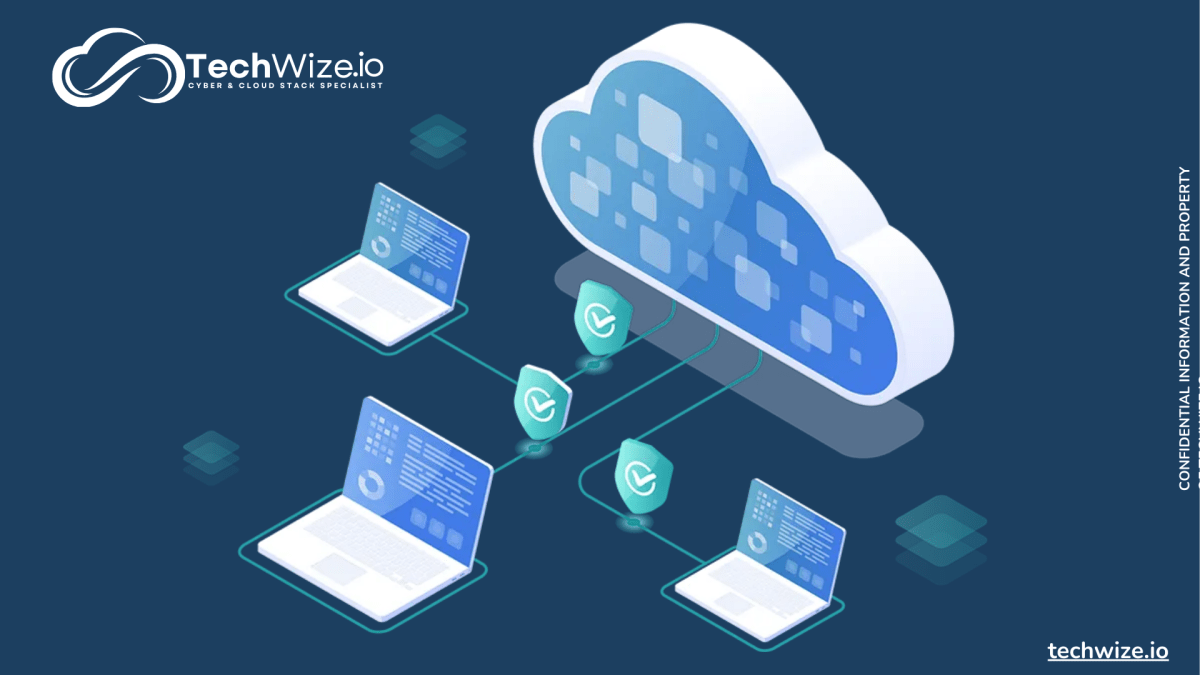
The primary role of an IoT Hub is to serve as a middleware layer between IoT devices and the cloud or local network. It collects data from sensors, processes commands, and ensures secure transmission. This hub doesn’t just pass data—it filters, prioritizes, and sometimes even analyzes it before forwarding.
- Acts as a message broker between devices and applications
- Supports multiple communication protocols like MQTT, HTTP, and CoAP
- Enables bi-directional communication for real-time control
IoT Hub vs. Traditional Networking Devices
Unlike routers or switches, which simply move data packets, an IoT Hub understands the context of the data. It can differentiate between a temperature alert from a sensor and a command to turn off a motor. This contextual intelligence makes it indispensable in complex IoT ecosystems.
“An IoT Hub is not just a conduit—it’s a decision engine that enables smarter, faster, and more secure IoT operations.” — IoT Architecture Whitepaper, IEEE, 2023
How an IoT Hub Powers Smart Homes
In residential settings, the IoT Hub is the invisible conductor orchestrating everything from lighting to security. Whether you’re using Amazon Alexa, Google Home, or Apple HomeKit, each relies on a central hub—either physical or cloud-based—to manage device interoperability.
Device Integration and Interoperability
One of the biggest challenges in smart homes is getting devices from different manufacturers to work together. An IoT Hub solves this by translating protocols. For example, a Zigbee-based smart bulb and a Z-Wave door lock can coexist because the hub acts as a universal translator.
- Supports cross-platform communication (e.g., Philips Hue with Nest)
- Reduces latency by processing commands locally when possible
- Enables automation rules like “If motion detected, turn on lights”
Local vs. Cloud-Based IoT Hubs
Some IoT Hubs operate entirely in the cloud (like Amazon Echo), while others, such as Samsung SmartThings Hub, process data locally. Local hubs offer faster response times and better privacy, as data doesn’t leave your home network. Cloud-based hubs, however, provide greater scalability and remote access.
Learn more about cloud vs. edge computing in IoT: AWS IoT Core
IoT Hub in Industrial Automation (IIoT)
When it comes to factories, power plants, or logistics centers, the IoT Hub becomes even more critical. In Industrial IoT (IIoT), these hubs manage thousands of sensors and machines, enabling predictive maintenance, real-time monitoring, and process optimization.
Real-Time Data Processing at Scale
Industrial environments generate massive volumes of data. An IoT Hub filters noise from critical signals—like detecting a vibration anomaly in a turbine before it fails. By processing data at the edge, these hubs reduce bandwidth usage and enable immediate action.
- Handles millions of messages per second in large deployments
- Integrates with SCADA systems for industrial control
- Supports time-sensitive networking (TSN) for deterministic communication
Microsoft Azure IoT Hub: A Case Study
Microsoft’s Azure IoT Hub is one of the most widely adopted platforms for industrial applications. It offers device management, secure connectivity, and integration with AI analytics. Companies like Rolls-Royce use Azure IoT Hub to monitor jet engine performance in real time.
“Azure IoT Hub enabled us to reduce unplanned downtime by 30% across our fleet.” — Rolls-Royce Engineering Report, 2022
Security Challenges in IoT Hub Ecosystems
With great connectivity comes great risk. IoT Hubs are prime targets for cyberattacks because compromising one can give access to an entire network of devices. From ransomware attacks on smart homes to industrial espionage, security is non-negotiable.
Common Vulnerabilities in IoT Hubs
Many IoT Hubs suffer from weak authentication, unencrypted data transmission, or outdated firmware. Default passwords, lack of two-factor authentication, and open ports make them easy prey for hackers. In 2023, over 60% of IoT breaches originated from compromised hubs.
- Weak or hardcoded credentials
- Lack of end-to-end encryption
- Insufficient firmware update mechanisms
Best Practices for Securing Your IoT Hub
To protect your IoT ecosystem, follow these proven strategies:
- Use strong, unique passwords and enable two-factor authentication
- Regularly update firmware to patch known vulnerabilities
- Segment your network to isolate IoT traffic from critical systems
- Enable device authentication using certificates or tokens
For enterprise-grade security, explore Cisco IoT Security Solutions
Top IoT Hub Platforms in 2024
Choosing the right IoT Hub platform depends on your needs—whether it’s for home automation, industrial monitoring, or large-scale smart city projects. Here are the leading platforms shaping the industry.
Amazon Web Services (AWS) IoT Core
AWS IoT Core allows you to connect billions of devices and process trillions of messages. It supports MQTT, HTTP, and WebSockets, and integrates seamlessly with AWS Lambda, S3, and Machine Learning services. Ideal for scalable, cloud-native IoT applications.
- Auto-scaling for high-traffic environments
- End-to-end encryption and device identity management
- Real-time analytics with AWS IoT Events
Google Cloud IoT
Although Google deprecated its standalone Cloud IoT Core in 2023, its functionality has been integrated into Google Cloud’s broader data analytics suite. Now, IoT data flows directly into BigQuery and Pub/Sub, enabling powerful AI-driven insights.
- Strong integration with TensorFlow for AI modeling
- Real-time data streaming with Dataflow
- Enhanced security via Google’s BeyondCorp framework
Home Assistant and Open-Source Hubs
For privacy-conscious users, open-source IoT Hubs like Home Assistant offer full control over data. Running on a Raspberry Pi or local server, these hubs keep everything on-premise, eliminating reliance on third-party clouds.
- Complete data ownership and no vendor lock-in
- Supports over 1,000 integrations via community add-ons
- Highly customizable automation workflows
Explore Home Assistant: https://www.home-assistant.io
The Role of IoT Hub in Edge Computing
As latency-sensitive applications grow—like autonomous vehicles and robotic surgery—the need for real-time processing has shifted computation closer to the source. This is where edge computing meets the IoT Hub.
Edge IoT Hubs: Processing at the Source
Edge IoT Hubs perform data filtering, aggregation, and even machine learning inference locally. Instead of sending every sensor reading to the cloud, only relevant data is transmitted. This reduces bandwidth costs and improves response times.
- Enables sub-10ms response for critical systems
- Reduces dependency on internet connectivity
- Improves data privacy by minimizing cloud exposure
NVIDIA Jetson and AI-Powered IoT Hubs
NVIDIA’s Jetson series brings AI capabilities to edge IoT Hubs. These compact devices run deep learning models for object detection, speech recognition, and predictive analytics—right at the device level. Used in drones, retail analytics, and smart cameras.
- Supports CUDA and TensorRT for accelerated AI inference
- Consumes less than 15W of power
- Integrates with ROS (Robot Operating System)
Future Trends: Where Is the IoT Hub Heading?
The IoT Hub is evolving beyond a mere data router. With advancements in AI, 5G, and quantum encryption, the next generation of hubs will be smarter, faster, and more autonomous than ever.
AI-Driven IoT Hubs
Future IoT Hubs will use embedded AI to predict user behavior, detect anomalies, and self-optimize. Imagine a hub that learns your daily routine and adjusts lighting, temperature, and security without explicit commands.
- Behavioral pattern recognition using machine learning
- Self-healing networks that reroute traffic during failures
- Proactive maintenance alerts based on predictive analytics
5G and Ultra-Low Latency Hubs
With 5G rollout accelerating, IoT Hubs will leverage network slicing and ultra-reliable low-latency communication (URLLC) for mission-critical applications. This will enable remote surgery, autonomous fleet coordination, and real-time industrial control.
- Latency as low as 1ms in 5G-enabled hubs
- Support for massive device density (up to 1 million devices/km²)
- Dynamic bandwidth allocation based on priority
Quantum-Secure IoT Hubs
As quantum computing advances, traditional encryption may become obsolete. Next-gen IoT Hubs will adopt post-quantum cryptography to protect against future threats. NIST is already standardizing quantum-resistant algorithms for IoT security.
- Implementation of lattice-based and hash-based cryptography
- Secure key exchange resistant to quantum attacks
- Future-proofing critical infrastructure
Choosing the Right IoT Hub for Your Needs
Not all IoT Hubs are created equal. The right choice depends on your use case, budget, technical expertise, and scalability requirements. Whether you’re a homeowner, a startup, or an enterprise, there’s a hub tailored for you.
Key Factors to Consider
Before purchasing or deploying an IoT Hub, evaluate these critical aspects:
- Compatibility: Does it support your devices’ protocols (Zigbee, Z-Wave, Bluetooth, Wi-Fi)?
- Security: Does it offer encryption, device authentication, and regular updates?
- Scalability: Can it handle growth from 10 to 1,000 devices?
- Privacy: Is data processed locally or in the cloud?
- Cost: Consider both upfront and long-term operational expenses
IoT Hub for Home Users vs. Enterprises
Home users prioritize ease of use, affordability, and integration with voice assistants. Enterprise users, on the other hand, need robust security, device management, and API access for custom integrations. Platforms like Hubitat cater to tinkerers, while Azure IoT Hub serves global corporations.
- Home: Focus on plug-and-play, app control, and voice integration
- Enterprise: Demand for audit logs, role-based access, and SLAs
- SMBs: Balance between cost and functionality
What is an IoT Hub?
An IoT Hub is a central platform that connects, manages, and secures IoT devices. It enables communication between devices, applications, and the cloud, acting as the backbone of smart systems in homes, industries, and cities.
How does an IoT Hub improve security?
An IoT Hub enhances security by enforcing device authentication, encrypting data in transit, and providing centralized monitoring. It allows administrators to detect anomalies, revoke access to compromised devices, and apply security patches uniformly.
Can I use an IoT Hub without internet?
Yes, many IoT Hubs support local processing and offline operation. Open-source platforms like Home Assistant can run entirely on a local network, enabling automation and control without internet access.
Which IoT Hub is best for beginners?
For beginners, the Amazon Echo or Google Nest Hub are excellent starting points. They’re user-friendly, support many devices, and integrate with popular smart home ecosystems.
Do IoT Hubs work with all smart devices?
Not all hubs support every device. Compatibility depends on communication protocols (e.g., Zigbee, Z-Wave). Always check if your devices are supported before purchasing a hub.
The IoT Hub is no longer a luxury—it’s a necessity in our hyper-connected world. From securing smart homes to driving industrial innovation, it sits at the heart of the IoT revolution. As technology evolves, so too will the capabilities of these intelligent hubs, becoming faster, smarter, and more secure. Whether you’re a consumer, developer, or enterprise leader, understanding the power of the IoT Hub is the first step toward building a truly intelligent environment.
Further Reading:
