Machine Learning (ML) is transforming how we live, work, and think. From personalized recommendations to self-driving cars, ML quietly powers innovations we use every day. But what exactly is it, and why does it matter so much now? Let’s dive in.
What Is Machine Learning (ML)? A Simple Yet Powerful Definition

At its core, Machine Learning (ML) is a subset of artificial intelligence (AI) that enables computers to learn from data without being explicitly programmed. Instead of following rigid instructions, ML systems identify patterns, make decisions, and improve over time through experience.


How Machine Learning Differs from Traditional Programming
In traditional programming, developers write rules and feed them data to produce outputs. In contrast, Machine Learning (ML) reverses this process: you feed data and the desired output, and the system learns the rules.
Machine Learning (ML) – Machine Learning (ML) menjadi aspek penting yang dibahas di sini.
- Traditional Programming: Rules + Data → Output
- Machine Learning: Data + Output → Rules
This fundamental shift allows ML to handle complex, ambiguous, or evolving problems—like recognizing faces in photos or predicting stock trends—where writing explicit rules would be nearly impossible.
The Role of Data in Machine Learning (ML)
Data is the lifeblood of any Machine Learning (ML) system. The quality, quantity, and relevance of data directly impact the model’s performance. Garbage in, garbage out—this adage holds especially true in ML.
For example, training a facial recognition model requires thousands (or millions) of labeled images. Without diverse and representative data, the model may fail to recognize certain demographics, leading to biased outcomes. That’s why data preprocessing, cleaning, and augmentation are critical steps in any ML pipeline.
Machine Learning (ML) – Machine Learning (ML) menjadi aspek penting yang dibahas di sini.
“Data is the new oil” – Clive Humby, mathematician and data science pioneer.
Types of Machine Learning (ML): Supervised, Unsupervised, and Reinforcement Learning
Machine Learning (ML) isn’t a one-size-fits-all field. It’s broadly categorized into three main types: supervised, unsupervised, and reinforcement learning. Each serves different purposes and uses distinct techniques.
Supervised Learning: Learning with Labeled Data
Supervised learning involves training a model on a labeled dataset, where each input is paired with the correct output. The goal is for the model to learn a mapping from inputs to outputs so it can predict outcomes for new, unseen data.
Common applications include:
Machine Learning (ML) – Machine Learning (ML) menjadi aspek penting yang dibahas di sini.
- Email spam detection (classification)
- House price prediction (regression)
- Medical diagnosis from imaging data
Popular algorithms in supervised learning include linear regression, logistic regression, decision trees, random forests, and support vector machines (SVMs). For more on these, check out Scikit-learn’s official documentation.
Unsupervised Learning: Finding Hidden Patterns
Unlike supervised learning, unsupervised learning deals with unlabeled data. The model tries to find inherent structures or patterns without any guidance on what the output should be.
Key techniques include:
Machine Learning (ML) – Machine Learning (ML) menjadi aspek penting yang dibahas di sini.
- Clustering: Grouping similar data points (e.g., customer segmentation)
- Dimensionality Reduction: Simplifying data while preserving structure (e.g., PCA)
- Association Rule Learning: Discovering relationships between variables (e.g., market basket analysis)
Algorithms like K-means, hierarchical clustering, and t-SNE are widely used. Unsupervised learning is especially useful in exploratory data analysis and anomaly detection.
Reinforcement Learning: Learning by Doing
Reinforcement learning (RL) is inspired by behavioral psychology. An agent learns to make decisions by interacting with an environment, receiving rewards or penalties based on its actions.
Think of it like training a dog: good behavior gets a treat; bad behavior gets nothing. Over time, the agent learns a policy that maximizes cumulative reward.
Machine Learning (ML) – Machine Learning (ML) menjadi aspek penting yang dibahas di sini.
Famous examples include:
- AlphaGo by DeepMind, which defeated world champions in Go
- Autonomous vehicles learning to navigate traffic
- Game-playing AI like OpenAI’s Dota 2 bot
For deeper insights, visit DeepMind’s research page on reinforcement learning.
Key Algorithms in Machine Learning (ML): The Engines Behind the Magic
While the types of ML define the learning paradigm, algorithms are the actual tools that power the models. Understanding key algorithms helps demystify how ML works under the hood.
Machine Learning (ML) – Machine Learning (ML) menjadi aspek penting yang dibahas di sini.
Linear Regression and Logistic Regression
Despite their simplicity, regression models are foundational in Machine Learning (ML).
- Linear Regression: Predicts continuous values (e.g., temperature, sales). It fits a straight line to data points to minimize prediction error.
- Logistic Regression: Despite the name, it’s used for classification (e.g., yes/no, spam/not spam). It outputs probabilities using the logistic (sigmoid) function.
These models are interpretable, fast, and great baselines for more complex approaches.
Decision Trees and Random Forests
Decision trees mimic human decision-making by splitting data based on feature values. Each node represents a decision, and branches lead to outcomes.
Machine Learning (ML) – Machine Learning (ML) menjadi aspek penting yang dibahas di sini.
However, single trees can overfit. That’s where Random Forests come in—a collection of many decision trees that vote on the final prediction, reducing variance and improving accuracy.
Random Forests are robust, handle missing data well, and require little preprocessing, making them popular in both academia and industry.
Neural Networks and Deep Learning
Neural networks are inspired by the human brain. They consist of layers of interconnected nodes (neurons) that process information.
Machine Learning (ML) – Machine Learning (ML) menjadi aspek penting yang dibahas di sini.
When networks have many layers, it’s called deep learning—a subfield of Machine Learning (ML) that has revolutionized areas like computer vision and natural language processing (NLP).
- Convolutional Neural Networks (CNNs): Excel at image recognition tasks.
- Recurrent Neural Networks (RNNs): Handle sequential data like speech or text.
- Transformers: Power modern language models like BERT and GPT.
To explore neural networks further, visit Google’s Machine Learning Crash Course.
Applications of Machine Learning (ML) Across Industries
Machine Learning (ML) isn’t just a tech buzzword—it’s actively reshaping industries. From healthcare to finance, ML drives efficiency, innovation, and personalization.
Machine Learning (ML) – Machine Learning (ML) menjadi aspek penting yang dibahas di sini.
Healthcare: Diagnosing Diseases and Personalizing Treatment
ML is saving lives by enabling early disease detection and precision medicine.
- AI models analyze medical images (X-rays, MRIs) to detect tumors with accuracy rivaling radiologists.
- Predictive models identify patients at risk of diabetes, heart disease, or sepsis.
- Drug discovery platforms use ML to simulate molecular interactions, speeding up development.
For example, Google Health’s AI for breast cancer screening reduced false positives and negatives in studies across multiple countries.
Finance: Fraud Detection and Algorithmic Trading
Banks and fintech companies rely on Machine Learning (ML) to detect anomalies and automate decisions.
Machine Learning (ML) – Machine Learning (ML) menjadi aspek penting yang dibahas di sini.
- Fraud detection systems flag suspicious transactions in real time using anomaly detection algorithms.
- Credit scoring models assess risk more accurately by analyzing non-traditional data (e.g., mobile usage).
- Algorithmic trading uses ML to predict market movements and execute trades at optimal times.
Companies like JPMorgan Chase use ML to automate document review and compliance checks, saving thousands of hours annually.
Retail and E-commerce: Personalization and Demand Forecasting
Ever wonder how Amazon recommends products you might like? That’s Machine Learning (ML) in action.
- Recommendation engines use collaborative filtering and deep learning to suggest items based on user behavior.
- Demand forecasting models predict inventory needs, reducing overstock and stockouts.
- Dynamic pricing algorithms adjust prices in real time based on demand, competition, and user profiles.
Netflix’s recommendation system, powered by ML, is estimated to save the company over $1 billion per year by reducing churn.
Machine Learning (ML) – Machine Learning (ML) menjadi aspek penting yang dibahas di sini.
The Machine Learning (ML) Workflow: From Data to Deployment
Building a successful ML system isn’t just about choosing the right algorithm. It’s a multi-stage process that requires careful planning and execution.
Data Collection and Preprocessing
This is often the most time-consuming phase. Data can come from databases, APIs, sensors, or web scraping.
Preprocessing steps include:
Machine Learning (ML) – Machine Learning (ML) menjadi aspek penting yang dibahas di sini.
- Handling missing values (imputation or removal)
- Encoding categorical variables (one-hot, label encoding)
- Scaling features (standardization, normalization)
- Dealing with outliers
Poor preprocessing can doom even the most sophisticated models. That’s why data scientists spend up to 80% of their time on this stage.
Model Training and Evaluation
Once data is ready, it’s split into training, validation, and test sets. The model learns from the training data, tunes hyperparameters on validation, and is finally evaluated on unseen test data.
Common evaluation metrics include:
Machine Learning (ML) – Machine Learning (ML) menjadi aspek penting yang dibahas di sini.
- Accuracy, Precision, Recall, F1-Score: For classification tasks
- Mean Absolute Error (MAE), RMSE: For regression
- ROC-AUC: Measures model’s ability to distinguish classes
Cross-validation is often used to ensure the model generalizes well and isn’t overfitting.
Model Deployment and Monitoring
A model in a Jupyter notebook isn’t useful—it needs to be deployed into production.
Deployment options include:
Machine Learning (ML) – Machine Learning (ML) menjadi aspek penting yang dibahas di sini.
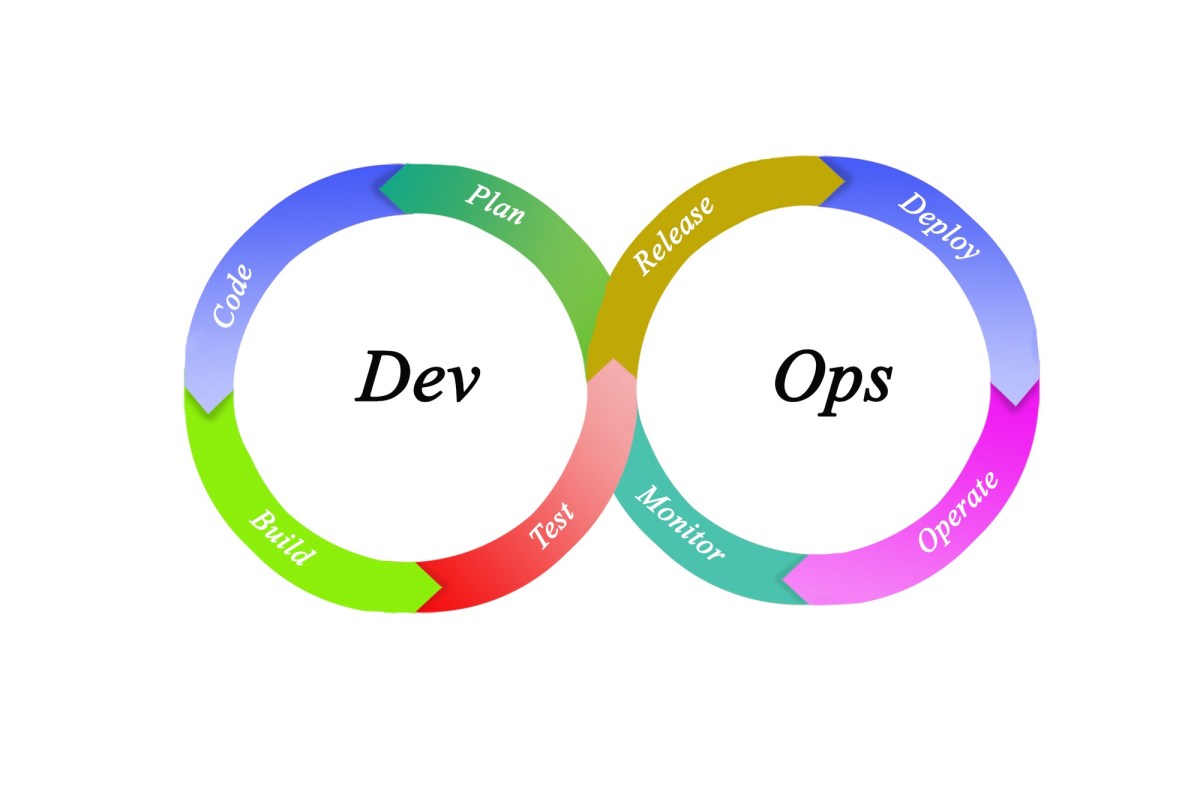
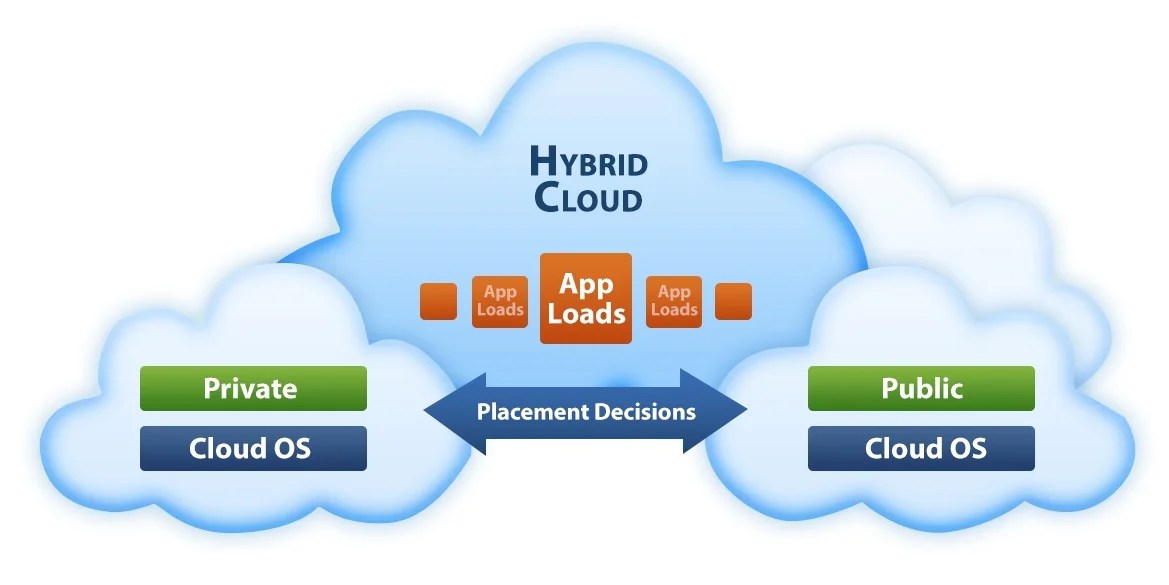
- Cloud platforms (AWS SageMaker, Google AI Platform, Azure ML)
- Containerization with Docker and orchestration via Kubernetes
- APIs (REST or GraphQL) to serve predictions
Once live, continuous monitoring is crucial. Models can degrade over time due to concept drift (changes in data patterns). Tools like Evidently AI help track model performance and data quality in real time.
Challenges and Ethical Considerations in Machine Learning (ML)
While Machine Learning (ML) offers immense potential, it also comes with significant challenges and ethical dilemmas.
Bias and Fairness in ML Models
ML models can inherit and even amplify biases present in training data. For example, facial recognition systems have been shown to perform poorly on darker-skinned individuals due to underrepresentation in training datasets.
Machine Learning (ML) – Machine Learning (ML) menjadi aspek penting yang dibahas di sini.
Ensuring fairness requires:
- Diverse and representative data collection
- Bias detection tools (e.g., IBM’s AI Fairness 360)
- Transparent model auditing and impact assessments
Organizations must proactively address bias to avoid discriminatory outcomes in hiring, lending, or law enforcement.
Data Privacy and Security
ML systems often require vast amounts of personal data, raising privacy concerns. Techniques like federated learning allow models to be trained across decentralized devices without sharing raw data.
Machine Learning (ML) – Machine Learning (ML) menjadi aspek penting yang dibahas di sini.
Regulations like GDPR and CCPA impose strict rules on data usage. Non-compliance can lead to heavy fines and reputational damage.
Additionally, ML models themselves can be targets of attacks—such as adversarial examples that trick image classifiers with tiny, imperceptible changes.
Explainability and Trust
Many ML models, especially deep learning ones, are “black boxes”—hard to interpret. This lack of transparency can be problematic in high-stakes domains like healthcare or criminal justice.
Machine Learning (ML) – Machine Learning (ML) menjadi aspek penting yang dibahas di sini.
Explainable AI (XAI) aims to make models more interpretable. Techniques include:
- LIME (Local Interpretable Model-agnostic Explanations)
- SHAP (SHapley Additive exPlanations)
- Attention mechanisms in neural networks
Building trust requires not just accuracy, but also clarity in how decisions are made.
The Future of Machine Learning (ML): Trends and Predictions
Machine Learning (ML) is evolving rapidly. Emerging trends are shaping its future trajectory and expanding its impact.
Machine Learning (ML) – Machine Learning (ML) menjadi aspek penting yang dibahas di sini.
AutoML and Democratization of ML
AutoML (Automated Machine Learning) tools like Google AutoML, H2O.ai, and DataRobot automate model selection, hyperparameter tuning, and feature engineering.
This democratizes ML, allowing non-experts—business analysts, marketers, doctors—to build and deploy models without deep technical knowledge.
As AutoML matures, we’ll see more citizen data scientists driving innovation across organizations.
Machine Learning (ML) – Machine Learning (ML) menjadi aspek penting yang dibahas di sini.
Federated Learning and Edge AI
Federated learning enables model training across decentralized devices (like smartphones) without centralizing data. This enhances privacy and reduces bandwidth usage.
Combined with edge AI—running ML models directly on devices (e.g., smart cameras, wearables)—this trend enables real-time, low-latency inference without relying on the cloud.
Apple and Google already use federated learning to improve keyboard predictions without accessing user messages.
Machine Learning (ML) – Machine Learning (ML) menjadi aspek penting yang dibahas di sini.
Generative AI and Large Language Models
Generative models like GANs (Generative Adversarial Networks) and large language models (LLMs) such as GPT-4 are redefining creativity and automation.
- GANs can generate realistic images, music, or even deepfakes.
- LLMs power chatbots, content creation, code generation, and more.
While powerful, these models raise concerns about misinformation, copyright, and job displacement. Responsible development and governance are critical.
Getting Started with Machine Learning (ML): Tools, Frameworks, and Learning Paths
Ready to dive into Machine Learning (ML)? Here’s how to begin your journey.
Machine Learning (ML) – Machine Learning (ML) menjadi aspek penting yang dibahas di sini.
Popular ML Frameworks and Libraries
Leverage open-source tools to accelerate your learning and development:
- TensorFlow: Google’s powerful library for deep learning and production deployment. Learn more at tensorflow.org.
- PyTorch: Developed by Meta, it’s favored for research and flexibility. Visit pytorch.org.
- Scikit-learn: Ideal for classical ML algorithms and beginners.
- Keras: A high-level API that runs on top of TensorFlow, great for rapid prototyping.
Learning Resources and Courses
Start with structured learning paths:
- Andrew Ng’s Machine Learning Course on Coursera: A classic introduction using MATLAB/Octave.
- Fast.ai: Practical deep learning for coders, using Python and PyTorch.
- Kaggle: Participate in competitions and learn from real-world datasets.
- Books: “Hands-On Machine Learning with Scikit-Learn, Keras, and TensorFlow” by Aurélien Géron.
Consistent practice and project-building are key to mastering Machine Learning (ML).
Machine Learning (ML) – Machine Learning (ML) menjadi aspek penting yang dibahas di sini.
Building Your First ML Project
Start small:
- Pick a dataset from Kaggle or UCI Machine Learning Repository.
- Choose a simple problem (e.g., predict house prices or classify iris flowers).
- Follow the full ML workflow: data cleaning, model training, evaluation, and visualization.
- Share your project on GitHub to build a portfolio.
Every expert was once a beginner. Your first model might not win a Nobel Prize, but it’s the first step toward mastery.
What is Machine Learning (ML) used for?
Machine Learning (ML) – Machine Learning (ML) menjadi aspek penting yang dibahas di sini.
Machine Learning (ML) is used for a wide range of applications, including image and speech recognition, recommendation systems, fraud detection, medical diagnosis, autonomous vehicles, natural language processing, and predictive analytics in business and finance.
How long does it take to learn Machine Learning (ML)?
With consistent effort, you can grasp the fundamentals of Machine Learning (ML) in 3–6 months. However, becoming proficient requires ongoing practice, project experience, and deeper study in areas like deep learning or MLOps. Prior knowledge of programming (Python) and math (linear algebra, statistics) speeds up the process.
Machine Learning (ML) – Machine Learning (ML) menjadi aspek penting yang dibahas di sini.
Do I need a PhD to work in Machine Learning (ML)?
No, a PhD is not required. Many ML engineers and data scientists hold bachelor’s or master’s degrees. Practical skills, project experience, and a strong portfolio often matter more than advanced degrees, especially in industry roles. However, research positions or cutting-edge AI labs may prefer PhDs.
Is Machine Learning (ML) the same as Artificial Intelligence (AI)?
Machine Learning (ML) – Machine Learning (ML) menjadi aspek penting yang dibahas di sini.
No. Machine Learning (ML) is a subset of Artificial Intelligence (AI). AI is the broader concept of machines performing tasks that typically require human intelligence, while ML specifically focuses on systems that learn from data. Think of AI as the umbrella, and ML as one of the tools underneath it.
What programming languages are best for Machine Learning (ML)?
Python is the most popular language for Machine Learning (ML) due to its simplicity and rich ecosystem (libraries like TensorFlow, PyTorch, scikit-learn). R is also used in statistical analysis, while Julia is emerging for high-performance computing. However, Python remains the dominant choice in both academia and industry.
Machine Learning (ML) is no longer a futuristic concept—it’s here, now, and reshaping our world. From understanding its core types and algorithms to exploring real-world applications and ethical challenges, this guide has walked you through the essential pillars of ML. Whether you’re a beginner or looking to deepen your expertise, the journey into Machine Learning (ML) is both challenging and rewarding. With the right tools, mindset, and curiosity, you can harness its power to solve meaningful problems and drive innovation across industries. The future isn’t just automated—it’s intelligent, and Machine Learning (ML) is leading the charge.
Recommended for you 👇
Further Reading:
